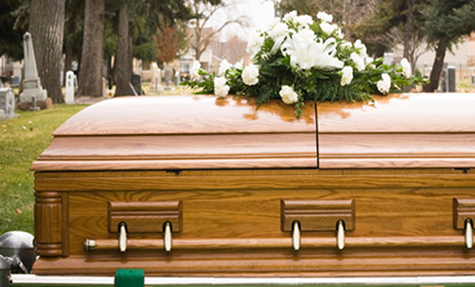
Depending on where the death occurs and under what circumstances, this explains what you should do when the death occurs:
Death in an Institution: When the death occurs at a hospital or nursing home, the medical staff should take care of all necessary legal steps. You just need to notify the medical staff that Watts Funeral Homes is the funeral home handling arrangements so they can have you sign any necessary release paperwork.
Anticipated Death at Home: Today, more people with terminal illnesses are electing to die at home under the care of hospice. In this situation, you just need to notify Hospice that Watts Funeral Homes is the funeral home of your choice, they will then take care of all necessary legal requirements. Many times when someone has a terminal illness, the family will elect to make prearrangements with us so that they are not overwhelmed with the many important decisions at the time of death.
Unanticipated Death at Home or Elsewhere: In these situations, immediately call 911. The police and emergency medical personnel will then determine the appropriate steps to be taken. Often, the police can release the human remains directly to our funeral home. However, in certain cases, the body may need to go to the Medical Examiner's office so that they can determine the cause of death.
Death out of state: If the death occurs outside of Florida, you should call Watts Funeral Homes on our toll-fee telephone number - 800-752-6349. We can coordinate with a local funeral director at the place of death. Being a member of several national associations, Watts Funeral Homes often can save families money by having our firm make the arrangements. If you travel often, it would be wise to let us tell you about our Travel Protection Plan, which would cover most costs associated with a death away from home.
To assure that one of our funeral directors is immediately available and can devote the personal attention and time needed to make the arrangements, we would request that you call to schedule a mutually convenient arrangement time. Although the vast majority of funeral conferences are handled at one of our chapels during normal business hours, we are available to come to your residence or meet in the evenings or weekends. One of our funeral directors is always on duty 24 hours a day, every day of the year.
When you come to the conference, you may want to bring with you the following items:
Military Discharge Papers (Form DD214)
Recent Photograph for newspaper & preparation purposes
Clothing - all normal items including undergarments, other than shoes. For women, an outfit closed at the neckline and long sleeves are preferred.
Jewelry & personal items - these items can either be brought to the arrangement conference, or on the day of the visitation. You will be given a receipt for such items which will also list your requested disposition
At the funeral arrangement conference, if you have not already made prearrangements with Watts Funeral Homes, our funeral directors will need to obtain some vital information for completing the death certificate. Certified copies of the death certificate are legal documents and are issued by the State of Florida Vital Statistics offices. Photocopies are not considered legal documents. After the original certificate has been signed by the physician or medical examiner and all vital information completed by our funeral home, it is filed with the Bureau of Vital Statistics. Fees for certified copies vary from county to county within the State.
During the funeral arrangement conference, we will ask you how many certified copies of the death certificate are needed. As part of our services, we will obtain certified copies on your behalf. Although we try to obtain the certified copies prior to the completion of the funeral service, this is not always possible. In order to assist you in ascertaining the number of certified copies needed, below is a checklist:
· Each Life Insurance Company
· Motor Vehicles
· Pension, IRA or other retirement benefits
· Probate of Will
· Each bank where account maintained
· Final Tax Return
· Stocks and Bonds
· Your own files
· Real Property
Please note that we will notify Social Security of the death so no death certificate is needed for that purpose.
What is The Difference Between A Funeral and Memorial Service? Really the only difference between these two services is whether or not the body is present. A funeral service is conducted with the presence of the body and a memorial service is conducted in memory of the person, without the presence of the full body. To learn more about memorial services, visit our cremation section of this guide
Why is a Funeral Service Important? In the earliest recorded times, societies honored the dead through ceremonies. According to beliefs at that time, the purpose of the ritual was to properly send the decedent on the journey into the next life. Today, however, psychologists and other experts agree that the benefits of the funeral are for those left behind; those who must reconstruct their lives following their loss. Before family and friends can fully adjust to their loss, survivors must express their grief in ways meaningful to them. They must face, openly and realistically, the fact that death has indeed occurred. The funeral provides the opportunity to do exactly that.
What Is The Purpose of Embalming? Embalming sanitizes and preserves the body, retards the decomposition process, and enhances the appearance of a body disfigured by traumatic death or illness. Embalming makes it possible to lengthen the time between death and the final disposition, thus allowing family members time to arrange and participate in the type of service most comforting to them.
Is Embalming Required By Law? No, in Florida embalming is not required by law. However, embalming is required if the family has selected a funeral service with a public wake or viewing. Embalming is also required if the deceased is to be transporting from one state to another by common carrier. For example, if an individual passes away in Florida and is to be transported by airplane to Ohio for burial, embalming would be required.
What Times Are Available For A Visitation? While we provide guidance with respect to visitation periods, we leave the actual time up to the family. Visitations may extend to multiple days or may take place in just an hour or so before the funeral service. Morning, afternoon and evening hours are available during the week or on weekends. It all depends upon the needs of the family.
Why Do Funerals Seem So Expensive? When compared to other major life cycle events, like births and weddings, funerals are not expensive. A wedding costs at least three times as much; but because it is a happy event, wedding costs are rarely criticized. A funeral home is a 24-hour, labor-intensive business, with extensive facilities (viewing rooms, chapels, limousines, hearses, etc.); these expenses must be factored into the cost of a funeral. Moreover, the cost of a funeral includes not only merchandise, like caskets, but the services of a funeral director in making arrangements, filing appropriate forms, dealing with doctors, ministers, florists, newspapers and others; and seeing to all the necessary details.
Can You Still Have a Traditional Funeral With Cremation? Just because someone is interested in cremation does not mean that the family cannot have a viewing and funeral service. All of the customs and ceremonies associated with a traditional funeral can still be performed prior to the cremation taking place. For these occasions, we offer economical cremation caskets and rental caskets.
Where Can a Funeral Be Held? Traditionally, funerals are held in a church, which is still a common practice today. However, there are several other options. Funeral services may be held at the funeral home in our Chapel or can even be held at the gravesite or cemetery chapel.
How Can A Funeral Be Personalized? It is becoming more common to tailor a funeral service to the personality of the deceased. Prayers and remembrances offered by family and friends, favorite music, treasured belongings, pictures and mementos can all play a major role in making the final tribute fitting and moving. The family can choose to assemble a display containing family photographs, favorite possessions, items from a hobby or awards the deceased received. These items help shift the emphasis of the services to the memories of the person's life, rather than on the circumstances of his or her death. Personalization can also be added by simply choosing the most appropriate services and products available from the funeral home. These include cremation and its various service options, participating in a living memorial program, or purchasing a burial plot below the canopy of a sturdy oak tree.
What Cemetery Options Are Available For Burial? Most funerals in North America conclude with earth burial, which is burying the remains contained in a casket into the ground. Purchases made for this option generally include a casket, a vault, a cemetery plot and a headstone or grave marker. Above ground entombment is provided in mausoleums, buildings designed and maintained to house human remains. Mausoleums are especially popular in certain regions of North America, and the availability and price ranges of mausoleum crypts vary depending on geographic location. In our area, there are several cemeteries that operate mausoleums.
Many families today are choosing cremation. All funeral homes advertise "cremation services", but don't be fooled! Practically all area funeral homes use common, multiple user, off-site industrial crematories to handle their cremations. Watts Funeral Homes though owns and operates their own on-premise crematory ensuring you the highest standards of care, comfort and accountability. Being an actual crematory operator and serving more cremation families every year than the majority of all other area funeral homes, we know all there is to know about cremation, and would like to share that knowledge with you so you can be an informed consumer. Please attend one of our free monthly cremation seminars and Cremation Tribute Center guided tour. Or, with our "open door" policy, drop by anytime and we would be proud to give you a private tour of our operation. Following are answers to some of the more common cremation questions.
What is cremation? Cremation is the process of reducing the human body to bone particles and ash through the application of direct flame and intense heat.
Can I have a service with cremation? For those desiring cremation, you actually have more options and flexibility when it comes to service offerings. Everything is available from a traditional funeral ceremony followed by cremation and then burial to a memorial service after the cremation has occurred. Furthermore, since we are not restricted by the operating hours of the cemetery, you have the flexibility to schedule your ceremonies for day or night.
Is embalming required? No. Florida law does require that the body be embalmed or held in refrigeration following 24 hours after death. We do require embalming if you elect to have a public ceremony with an open casket.
Is a casket necessary for cremation? Florida law does require that the body be held in a rigid, leak-proof container for dignified storage, transfer and handling. Today, we have a variety of cremation caskets and containers that are very economical and manufactured specifically for cremation.
Can We Witness the Cremation? Definitely. Our Cremation Tribute Center was built so that the initiation of the cremation process could be witnessed whether for religious, peace of mind, or other reasons the family can even start the cremation equipment if such participation is preferred for religious reasons.
Can I be cremated if I am Catholic? Prohibited prior to the Second Vatican, the Catholic Church has permitted cremation as a means of disposition, though not the preferred method. Our St. Augustine Diocese now permits the cremated remains to be taken to the church for the memorial mass. We would be glad to provide you with a copy of the Diocese's guidelines for cremation.
What are the legal requirements for cremation in Florida? There are three basic legal requirements which must be met before a cremation can be performed in Florida. First, at least 48 hours must elapse between the time of death and the time of the cremation. Second, a legally authorized individual must give permission for the cremation in writing. Third, the District Medical Examiner must give approval for the cremation which requires a completed death certificate for their review.
What can be done with the cremated remains? Your options are many. The cremated remains can be buried in a cemetery, placed in a columbarium niche, kept at home, scattered on private property or at least 3 miles offshore in the Gulf of Mexico. Our staff can assist you in exploring those options.
How long does the cremation process take? It depends on the size of the individual and the type of cremation container or casket. Typically, the process takes 2 to 3 hours at a normal operating temperature of 1600 to 1800 degrees Fahrenheit.
What happens following the cremation process? Following the actual cremation, all bone particles and other materials are retrieved from the cremation chamber by sweeping them into a stainless steel collection pan for cooling. Once cooled, all metal materials (metal casket parts, hip joints, & bridgework) are removed by both visual inspection and use of a strong magnet. The remaining bone particles and ash are then reduced into a small, consistent size and placed in the selected urn.
What do cremated remains look like? Cremated remains resemble coarse beach sand. They are typically light gray in color. The cremated remains of an average size adult would weigh between 5 to 8 pounds and usually take up 200 cubic inches in volume or less. Except for some minuscule amounts of cremated remains which cannot practically be removed from the cremation chamber, all cremated remains are placed in the selected urn. If the amount of cremated remains cannot fit inside the selected urn, then any excess cremated remains would be returned in a temporary urn supplied by our crematory.